Fall Rooftop Unit Checklist for Hampton Roads Businesses: Get Your Commercial HVAC Ready Before the First Cold Morning
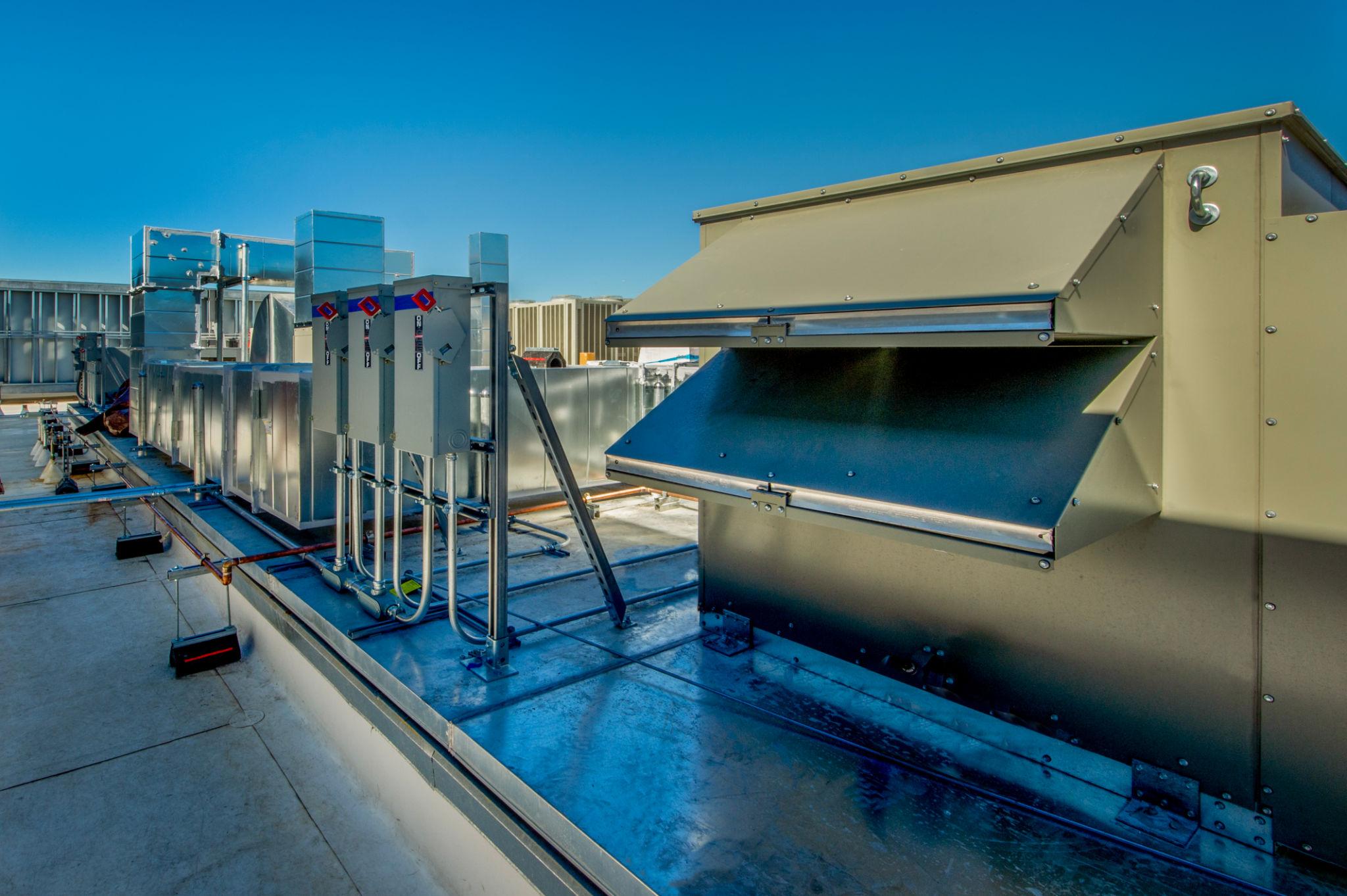
Every November, the same thing happens across Hampton Roads. The first real cold front comes through, a restaurant manager in Virginia Beach or a dental office in Chesapeake flips the thermostat to heat for the first time since spring, and nothing happens. Then they call a contractor — along with every other business in the region whose rooftop unit did the same thing that morning.
Rooftop package units are tough, but they have been running cooling almost nonstop since May, and the heating section has been sitting idle the entire time. Gas valves stick. Igniters crack. Belts that stretched in July finally slip. A September or October inspection finds this while it is a minor repair on a mild afternoon, instead of an emergency call on a 38-degree morning with customers in the building.
Here is what a fall rooftop unit inspection should cover, and what you can check yourself.
What You or Your Facilities Person Can Check
Turn the heat on now, on purpose
Pick a cool morning in September or October and switch every thermostat to heat with a setpoint a few degrees above the room. Give the unit five minutes. You want to feel warm air at the registers within that window. A unit that runs but never warms, or that starts and stops every couple of minutes, needs a technician. Do this for every zone and every unit — on a multi-unit rooftop, it is common for one unit to fail quietly while the others cover for it until the first cold snap.
Change the filters
Commercial filters should be changed quarterly at a minimum, and monthly in restaurants and anywhere with heavy foot traffic. A loaded filter restricts airflow, which in heating mode causes the unit to overheat and trip its high-limit switch. That is one of the most common "no heat" calls we get, and it is a filter.
Walk the roof once
Look for leaves, debris, and standing water around the units, panels that have blown loose, and any signs of rust streaking down the side of a unit. In coastal Norfolk and Virginia Beach, salt air corrodes cabinet panels and heat exchangers faster than inland, so rust streaks are worth a closer look. Check that the condensate drains are clear and that the unit is not sitting in water on the curb.
Check your thermostat schedules
If your building uses programmable or networked thermostats, confirm the heating schedule matches your actual hours. We regularly find offices heating to 70 degrees all night because the schedule was set for summer occupancy and never changed. That is money out the door every night from November to March.
Test carbon monoxide detectors
Any building with gas-fired rooftop units should have working CO detection in the occupied space. Test them now and replace batteries. This matters more in the fall than any other time of year.
What a Professional Fall RTU Inspection Includes
This is the part you cannot do from the thermostat. A proper heating-season inspection on a packaged rooftop unit covers:
- Heat exchanger inspection on gas units. Cracks let combustion gases into the supply air. This is a safety item, not a comfort item, and it is the number one reason to have a professional look at a gas RTU every fall.
- Gas pressure, ignition, and flame sensor. The flame sensor gets coated with a film over the summer and stops proving the flame, which makes the unit light and then shut down a few seconds later. Cleaning it takes minutes. Finding out about it in November costs a service call.
- Heat strips and defrost cycle on heat pump units. Electric backup strips draw a lot of amperage. We check each stage individually, because one failed stage will not show up on the thermostat — it just makes the building slow to warm and the power bill higher.
- Economizer and outside-air dampers. A damper stuck open in winter pulls cold outside air into the building and makes the heat run constantly. A damper stuck closed hurts indoor air quality. Both are common and both are easy to miss.
- Belts, pulleys, bearings, and blower amperage. Belts stretch and glaze over a summer of continuous running. A slipping belt in heating mode means low airflow, which means high-limit trips and no heat.
- Electrical connections and contactors. Pitted contactors and loose lugs fail under load, and heating mode adds load.
- Controls and safeties. High-limit switches, rollout switches, pressure switches, and the thermostat sequence get tested so the unit shuts down safely when it should — and only when it should.
Restaurants: One More Thing
If you run a kitchen, your heating problem is usually not the rooftop unit — it is the make-up air. Kitchen exhaust hoods pull a huge volume of air out of the building, and the make-up air unit is supposed to replace it with tempered air. When the make-up air heater fails or the unit is out of balance, the dining room goes cold because the hood is pulling 40-degree air in through every gap in the building. If your dining room is cold in winter but the RTU checks out, have the make-up air unit inspected at the same time.
Property Managers: Do This Across the Portfolio
If you manage several buildings or tenant spaces, the fall inspection is also the right time to build or update an equipment inventory: unit make, model, age, refrigerant type, and condition. That list is what lets you plan replacements on your schedule instead of the equipment's. Our Portfolio maintenance agreement includes this inventory and an annual replacement-planning review, and it puts every site under one contact and one invoice.
Timing Matters in Hampton Roads
Our first freeze typically lands in early to mid November, and the first real cold snap tends to arrive without much warning after a mild October. That gives you roughly six weeks from now to get ahead of it. After the first cold morning, every commercial contractor in the region is triaging emergency calls, and a routine inspection turns into a two-week wait.
RedVine Mechanical is scheduling fall rooftop unit inspections across Norfolk, Chesapeake, Virginia Beach, Portsmouth, Suffolk, Hampton, and Newport News now. Use the commercial quote form or call (757) 239-0081. Business inquiries go straight to the owner and get a callback the same business day.