First Time Turning On the Heat This Fall? Here's What's Normal in a Hampton Roads Home — and What Isn't
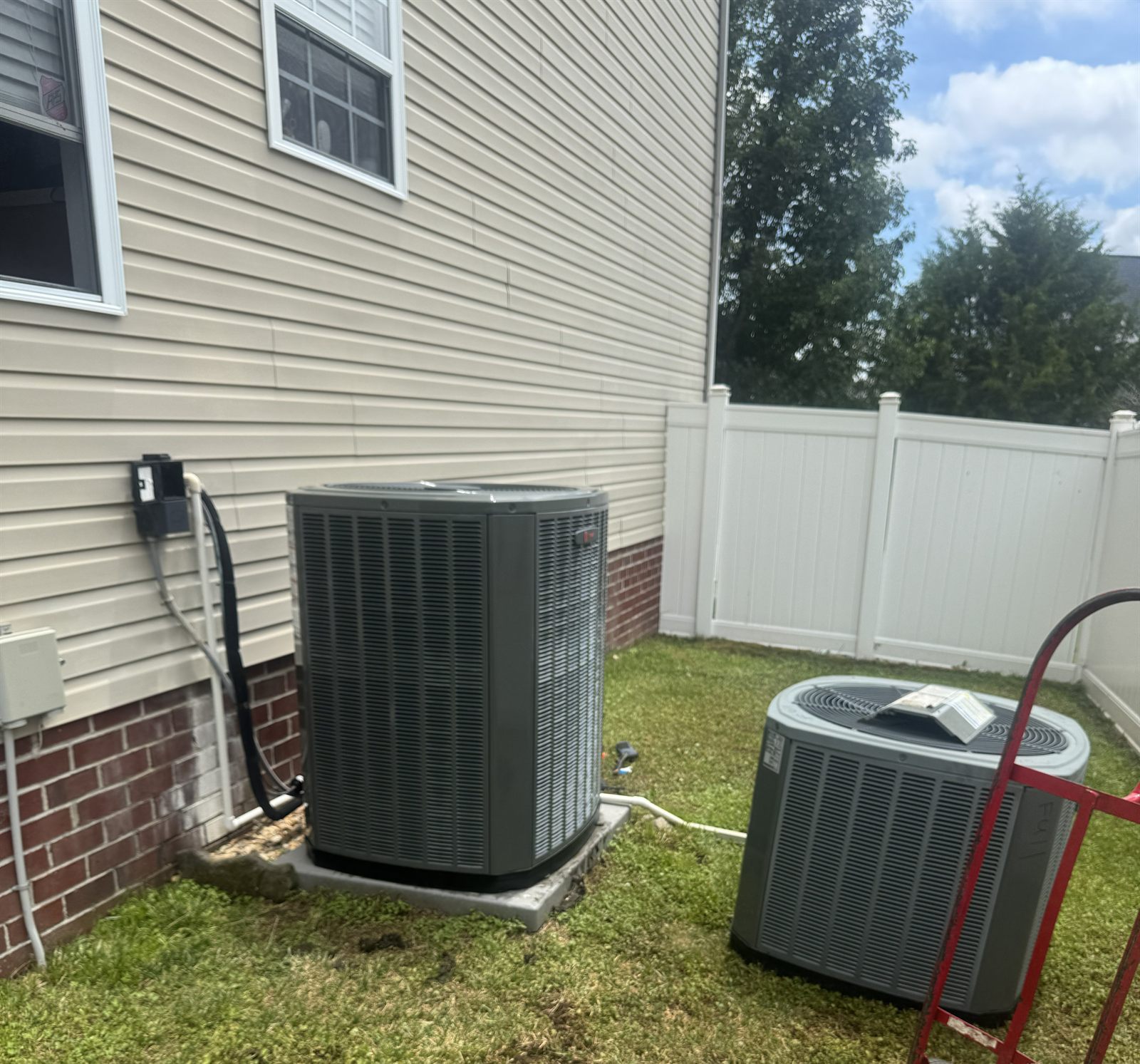
Every fall it happens the same way. Hampton Roads coasts through a warm September, then one night in October the temperature drops into the 40s, somebody flips the thermostat from cool to heat for the first time since March, and the phone at our shop starts ringing the next morning.
Most of those calls turn out to be nothing. A few of them are real problems that have been quietly waiting all summer. This post is meant to help you tell the difference before you pick up the phone — and to give you a reason to test your heat now, on a mild day, instead of finding out on a cold one.
Normal: A Burning or Dusty Smell for the First Half Hour
This is the number one first-heat call we get, and it is almost always harmless. Over a Hampton Roads summer, dust settles on the heat exchanger of a furnace or the electric heat strips inside a heat pump's air handler. The first time those surfaces get hot, that dust burns off. It smells like a hot iron or a space heater that has been in the closet all year.
It should fade within 20 to 30 minutes and not come back on the next cycle. Open a window if it bothers you. If the smell is sharp and electrical, like melting plastic, or if it lingers past the first hour, shut the system off and call us. That is a different problem.
Normal: Heat Pump Air That Feels Lukewarm
Most homes in Norfolk, Virginia Beach, and Chesapeake heat with a heat pump, and this one catches people every year, especially anyone who grew up with a gas furnace. A furnace pushes out air at 120 to 140 degrees. A heat pump delivers air at roughly 85 to 95 degrees. That is warmer than the room, so it is heating the house — but it is cooler than your skin, so it feels like a draft if you hold your hand over the vent.
Lukewarm supply air with a house that steadily reaches the set temperature is a heat pump doing its job. Lukewarm air with a house that stalls two or three degrees short is something we should look at. It can be low refrigerant, a weak compressor, or a reversing valve that is not fully switching over from cooling mode. All three are far cheaper to catch in October.
Normal: Longer Run Times Than the AC Had
Heat pumps are designed to run long, steady cycles in heating mode. A system that ran 15-minute cooling cycles in August may run 30 or 40 minutes at a time in the fall, and it may run close to continuously on the coldest mornings. That is expected. What is not expected is short-cycling — the system starting, running two or three minutes, and shutting off, over and over. Short-cycling in heat mode usually points to a thermostat issue, a clogged filter, or a refrigerant problem, and it wears out the compressor quickly.
Normal: Steam or a Brief Defrost Cycle on Damp Mornings
Our winters are not cold so much as cold and wet. When it is 35 degrees and the humidity is high — a very typical Hampton Roads morning — frost builds up on the outdoor coil of a heat pump. The system periodically reverses itself for a few minutes to melt it off. During defrost the outdoor fan stops, the unit may hiss or whoosh, a cloud of steam rises off the coil, and the indoor air goes cool for a couple of minutes while the backup heat strips cover the gap.
A defrost cycle every hour or so on a frosty morning is normal. A unit that is encased in ice, or that seems to be in defrost constantly, has a sensor or a valve problem.
Not Normal: The Auxiliary or Emergency Heat Light Stays On
Many thermostats show a small "AUX" or "EM HEAT" indicator when the backup electric strips are running. Seeing it flicker on during defrost, or during a big temperature setback in the morning, is fine. Seeing it stay lit for hours on a 45-degree day means the heat pump itself is not keeping up and the strips are doing the work.
The house will still be warm, so people often do not notice until the Dominion Energy bill shows up. Electric strip heat costs roughly two to three times as much per hour as the heat pump. If your aux light is on more than it is off, call us before the December bill.
Not Normal: A Loud Bang When the Furnace Lights
For the gas furnace homes in the area, a soft whoosh at ignition is normal. A bang or a boom is not. It usually means gas is building up in the burner compartment for a second or two before it lights — dirty burners, a weak igniter, or a flame sensor that has been coated with a summer's worth of grime. It is exactly the kind of thing a fall tune-up exists to catch, and the fix is usually a cleaning, not a part.
Not Normal: Your Carbon Monoxide Detector Chirps or Alarms
If you have a gas furnace and the CO detector goes off, leave the house, then call the gas company and 911 from outside. Do not troubleshoot it yourself. Once it is safe, we will inspect the heat exchanger and venting. A chirp every 30 seconds or so, on the other hand, is almost always a low battery — but change it today, not next week, because this is the season when it matters.
The Five-Minute Fall Heat Test
Do this on an afternoon in the 60s, not on the first cold night:
- Replace the air filter. A clogged filter is behind a surprising share of "no heat" calls.
- Switch the thermostat to Heat and set it about five degrees above the room temperature.
- Give the system a few minutes to start. Heat pumps have a built-in delay of up to five minutes.
- Hold your hand over a supply vent. Warm, moving air means the basics are working.
- Let it run 20 to 30 minutes. Note any smells past the first half hour, any banging, and whether the aux light comes on and stays on.
If it passes, you are in good shape and you have bought yourself peace of mind for the season. If anything on the "not normal" list shows up, you have found out in October, when we can get to you the same or next day and parts are easy to come by. In late December, after the first hard freeze hits Hampton Roads, nobody has that luxury.
Book the Tune-Up While the Weather Is Still Mild
A fall heating tune-up covers everything on this list and the things you cannot check from the thermostat: refrigerant pressure, heat strip amperage, the defrost control, burner and flame sensor cleaning, the heat exchanger, and the venting. Through November, fall tune-ups are $25 off for residential customers. Call (757) 239-0081 or use the contact form to book a day that works for you.